From concept to a production encrypted platform. Designed, delivered, and operated in-house.
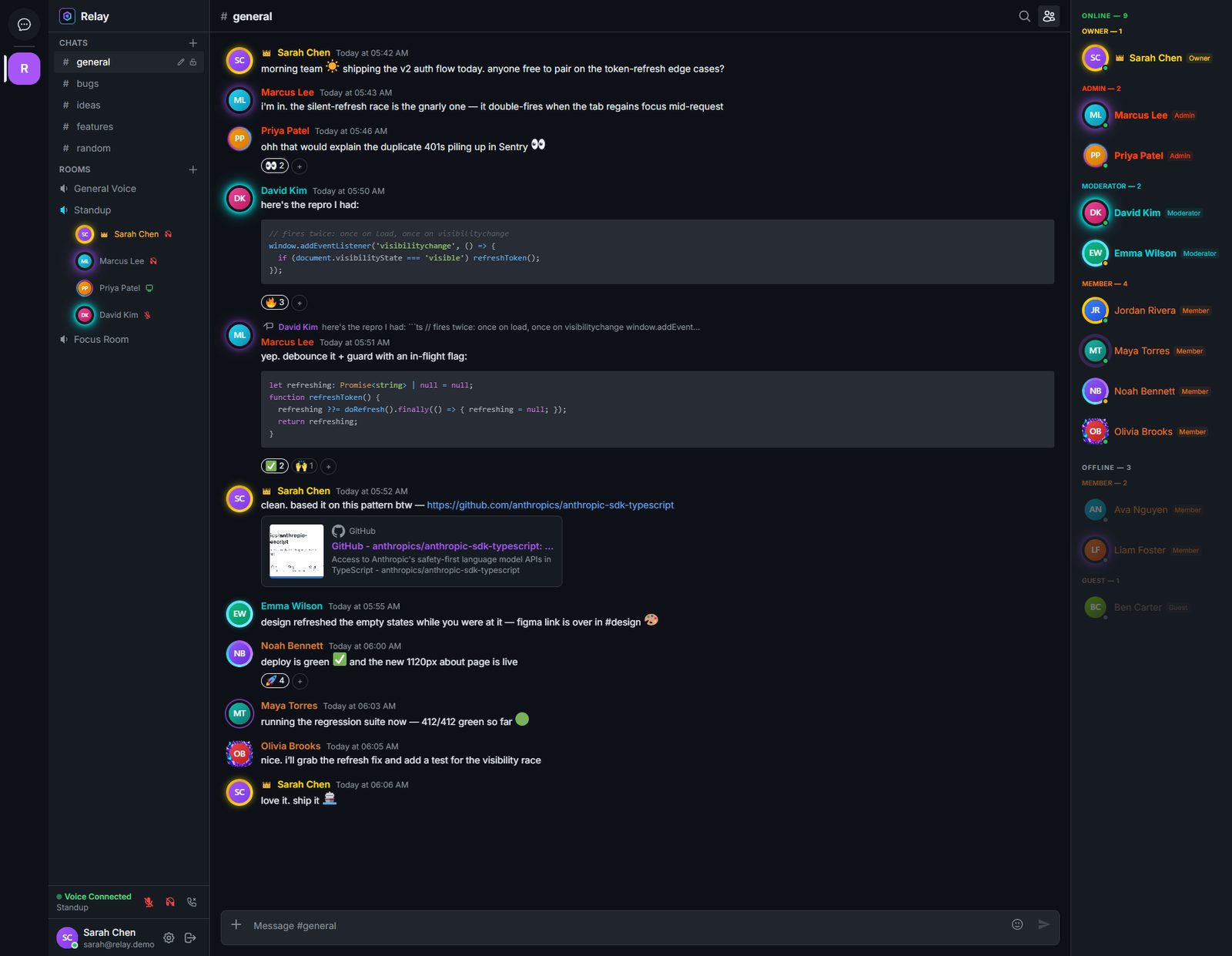
Relay is a self-hosted communications platform with end-to-end encrypted DMs that I designed, built, and operate end to end, in the hours around full-time enterprise delivery. It's also a demonstration of the delivery system behind it: governed, AI-assisted engineering turning part-time hours into team-level output.
stageActive private beta, 40+ testers: web + desktop, chat, voice, screen share, E2EE DMs
The method.
Instead of writing Relay line by line, I built agentic pipelines that plan, write, and review code under guardrails I design; I personally review every change before it merges.
A working private beta was in testers' hands on day one. The six months since turned that prototype into a production-operated platform through 500+ reviewed changes, with security, review, and testing built in from the start.
Why merge requests, not commits? Every number here is a reviewed, merged change on Relay's production branch, work that actually shipped, straight from the project's own history.
What I owned.
Everything: product strategy and scope, architecture, backlog and releases, the security model, infrastructure and deployment, beta feedback, and day-to-day production operations.
What I built.
The method scales. The same governed delivery approach runs on a business-critical enterprise ERP: ~350K lines of production code, ~95% generated by pipelines I built and directed, measured from the production repository. Delivered with a small dev team under external security audits with GDPR and PII controls. Client details confidential.
High volume and high quality are usually a trade-off. Designed and governed well, agentic systems let you have both: 500+ reviewed changes shipped from spare hours, with the merged history to back it.
Building agentic capability or secure platforms?
If you're working on agentic engineering or software that has to be trusted in production, I'd be glad to compare notes. Explore Relay →